Your Burn Pile
Burn Permits
Burn Permits are usually required from May 1st to the end of Fire Season. Thanks to the recent rains, Cal Fire has ended the Fire Season in Plumas County. Effective November 7, 2025, you are no longer required to obtain a Burn Permit before you burn. Be sure to visit this page to stay up-to-date on the current Burn Permit requirements.
When permits are required this is how you can get one.
Burn permits can be obtained at your local CALFIRE Station or online at https://burnpermit.fire.ca.gov
For more information visit: www.fire.ca.gov
Residents MUST verify it is a permissive burn day prior to burning by calling their local Air Pollution Control District. In the event of any forecasted wind events, you must ensure your dooryard burn pile has been extinguished and secured.
Your Burn Pile
Burning can only be done on permissive burn days. To find out if it is a permissive burn day, contact the local Air Pollution Control District. (530) 274-7928 option 5. The Unit Chief will implement a burn ban when weather conditions warrant.
Rules for Burning:
CALL (530) 274-7928 option 5 first to find out if it is a burn day.
Recommended burn hours are 9:00 am to 3:00 pm.
Do not burn on windy days.
Do not burn in a burn barrel without authorization from the air pollution control district.
Only natural vegetative material such as leaves, pine needles and tree trimmings may be burned.
No household trash or garbage can be burned
For burning debris in small 4-feet x 4-feet piles:
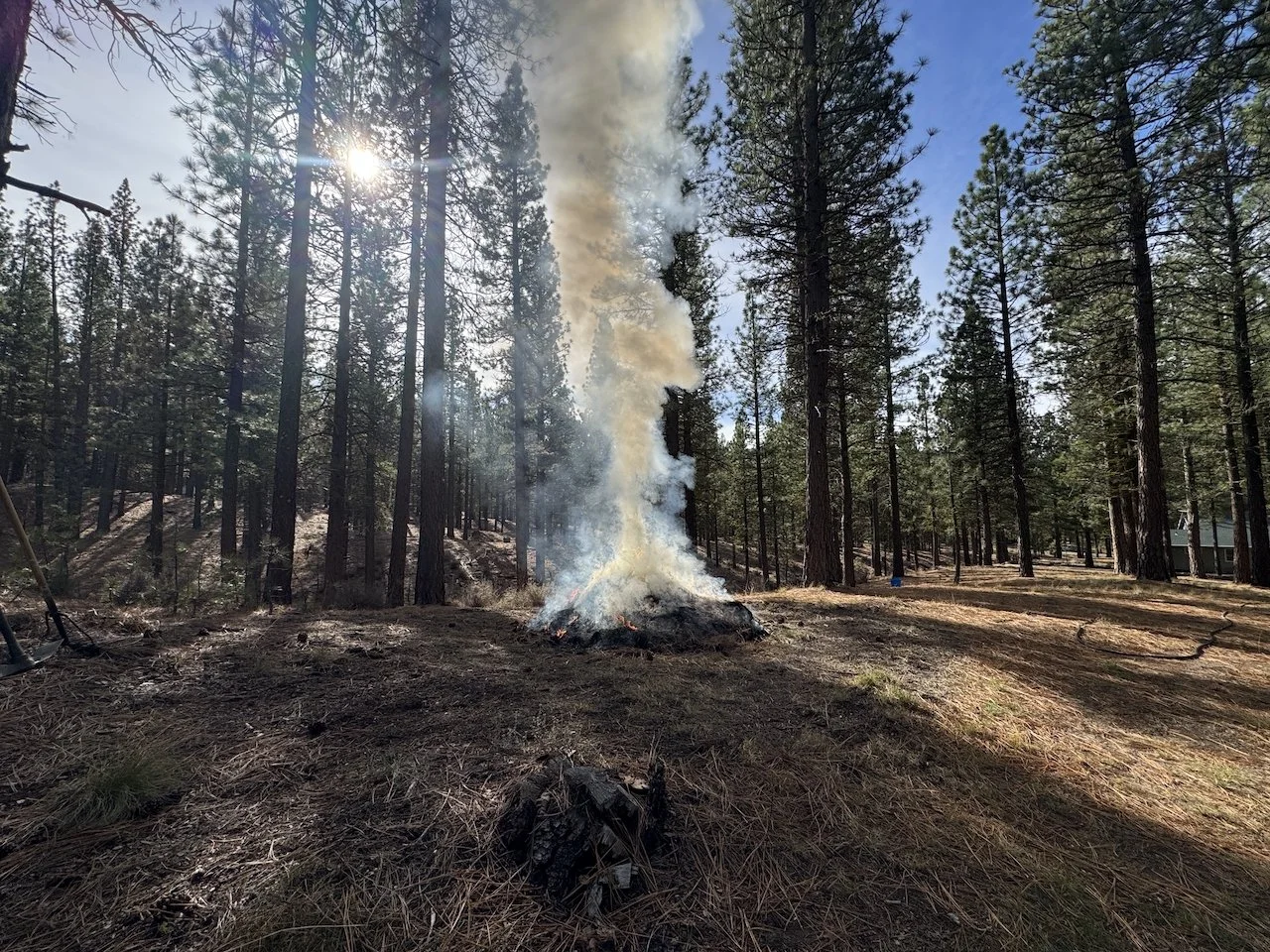
Maximum pile size 4 foot in diameter.
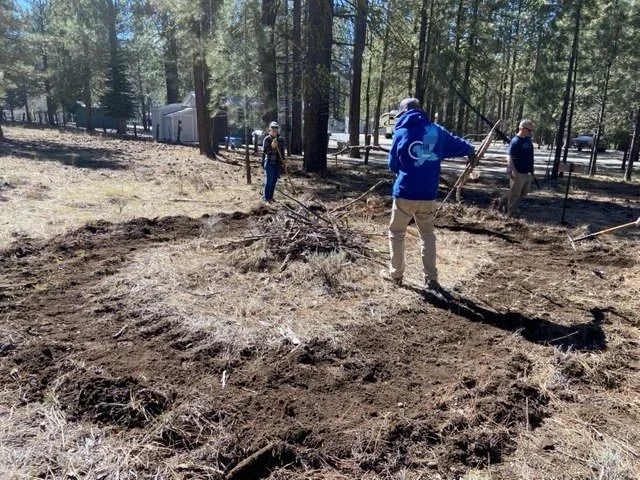
Clear all flammable material and vegetation within 10-feet of the outer edge of pile and down to the bare earth.
Keep a water supply close to the burning site.
An adult should be in attendance with a shovel until the fire is DEAD OUT.
You must have a signed permit in your possession while you are burning and you are responsible for always maintaining control of your fire. Possession of a permit does not protect you if your burn escapes. You are still liable for any suppression costs. If a burn escapes your control, you should seek help immediately. Wildfires can spread very quickly. A fast response from the fire department can reduce suppression cost considerably. Remember, you may be billed for suppression costs, so the sooner you seek help the better the outcome may be. Simple common sense can greatly reduce the chance of an escape. If you don’t feel it’s safe to conduct a burn, then don’t!
Building Your Pile
Make sure brush, limbs, leaves have dried for at least 60 days. The more it dries, the cleaner it burns.
Place the largest logs on the bottom: small sticks, dry leaves and brush in the center to create an easily combustible “nest”; and lots of medium-sized logs and branches on top.
The legal “home burner” pile size is 4 ft. in diameter by 4 ft. tall. You can add to this as it burns down.
Build piles on the flattest ground possible. If you must build on a hill, dig a “roll out” trench just below it, so that hot coals or logs will be caught before rolling downhill.
Place your piles at least 15 ft. from any structures.
Clear dead and dry vegetation including grass around the pile at least 4 ft. or, if possible, up to 10 feet.
Some live vegetation near the pile may get damage by heat. Place your piles at least 10 ft. from the base of any trees you don’t want damaged by fire. Keep in mind that, since heat rises, tree branches directly above the pile might still get singed and moss or dead branches could ignite. Consider removing branches above the pile or place the pile in a different location.
Do not add non-vegetative materials to your pile. Do not burn trash!
Extinguish the Burn Pile
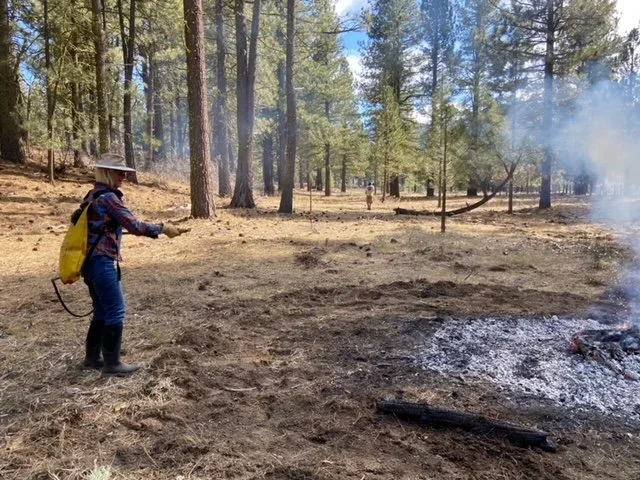
Let the pile burn down to ash or coal. Moving smoldering logs and coal toward the center with a metal rake or shovel will speed up the burn-down process.
Douse the pile with lots of water, while stirring with a shovel. It may take between 50 to 100 gallons of water, but aggressive stirring significantly reduces the total amount of water needed. It is very hard to extinguish piles completely when it is windy (winds above 8 mph). Water evaporates, if you don’t stir it in.
Spread the coals out from the center, if there is room; working with a larger surface area is easier to extinguish.
If you have hot logs, scrape all of the heat from these logs with a shovel, hoe or other metal hand tool. You can chop up, scrape and mix all of it with dirt. Covering hot logs with wet dirt is a great way to increase the effectiveness of water.
The pile is fully extinguished when the ashes and coals at the bottom of the pile are completely cold to the touch of your ungloved hand.
Check the burn area once on the night of the burn and twice during the following day- in the morning and again at the hottest time of day (typically between 2-4PM).
For the next 10 days, continue to check your burn area. Night patrols are necessary during windy or dry conditions, as you may be able to see burning embers that are not visible during the day. Use the backside of your ungloved hand to sense any heat coming from the pile.